Flat Winding Wire
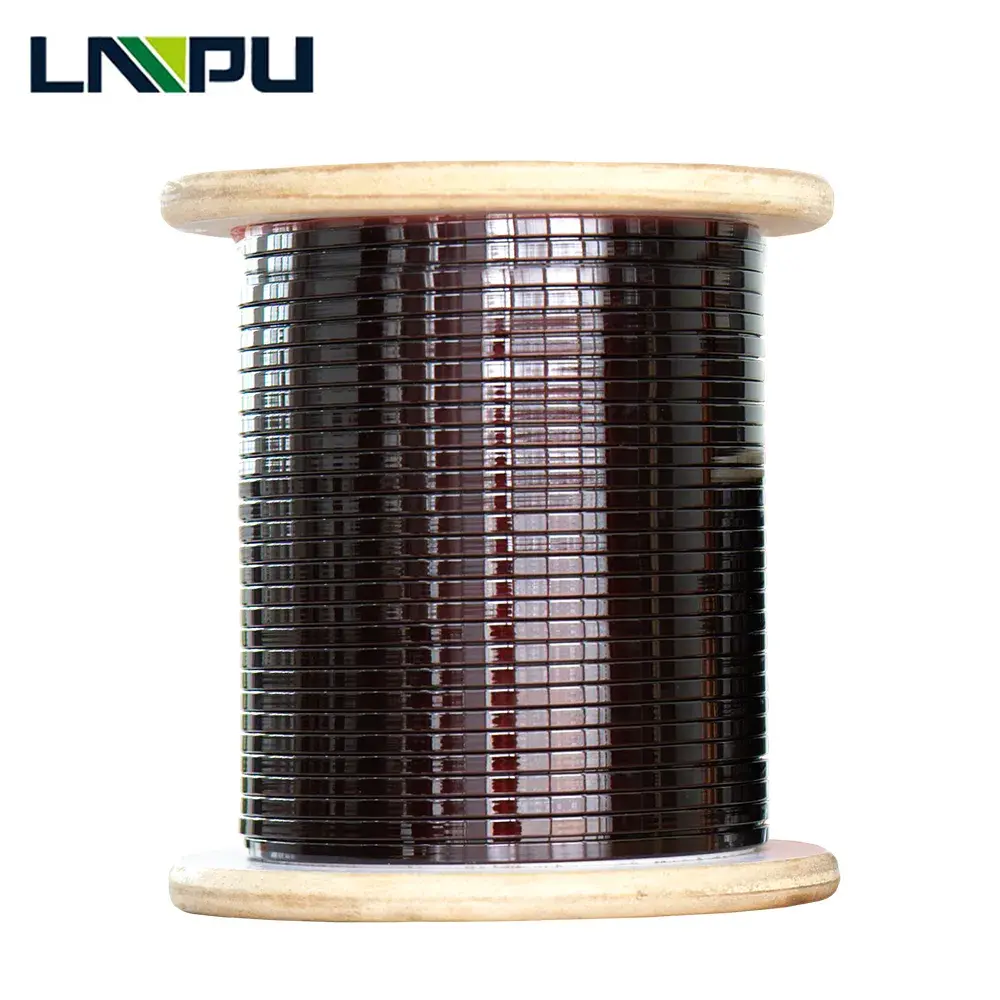
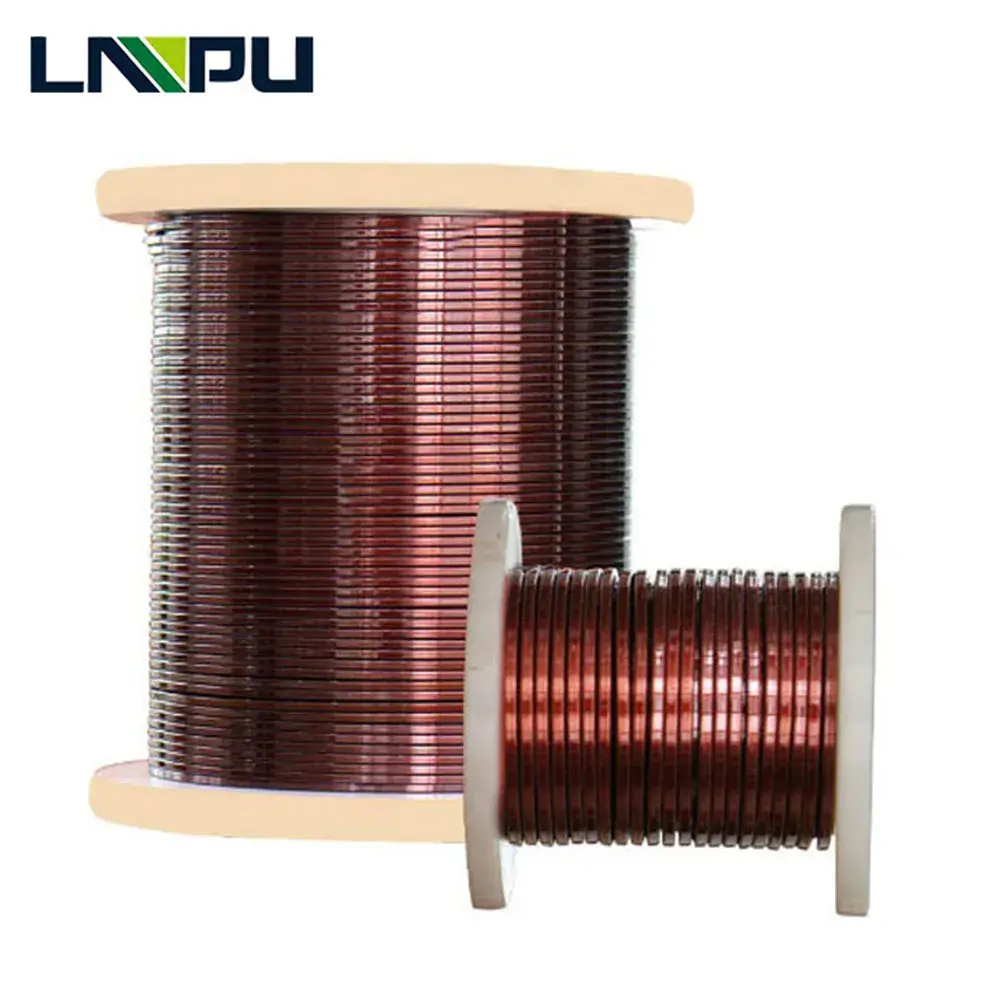
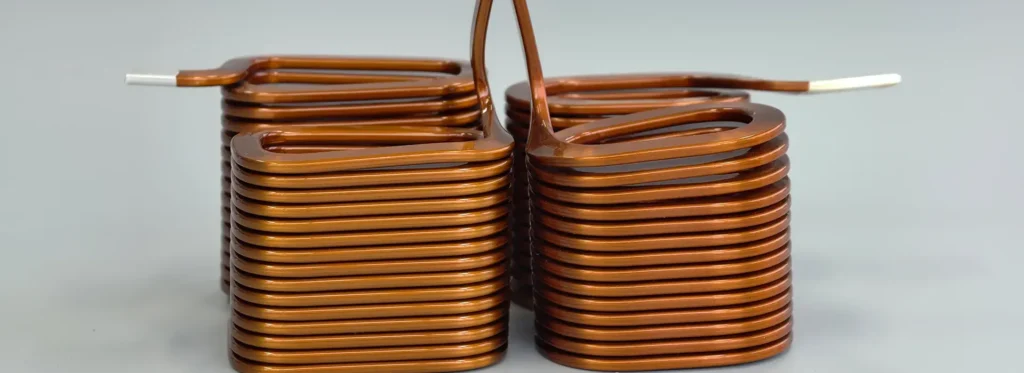
Flat winding wire, also known as rectangular magnet wire, is a type of magnet winding wire widely used in transformers, motors, generators, and other electrical equipment. Compared with round magnet wire, flat winding wire offers higher space utilization, better heat dissipation, and improved electrical performance.
Conductor Material:Copper (Cu) / Aluminum (Al)
Shape:Rectangular / Square
Dimensions: Thickness (a) 0.80 mm – 8.00 mm,Width (b) 2.00 mm – 25.00 mm
Cross-sectional Area:0.64 mm² – 625 mm²
Standards:IEC 60317, NEMA MW 1000, JIS C3202
Insulation Type:Polyester, Polyester-imide, Polyimide etc.
Certificate: UL, ROHS & reach, CE
Temperature index: 150°C, 180°C, 200°C, 240°C.
Polyvinyl formal flat winding wire and magnet square winding wire need to be customized.
Flat aluminum winding wire and flat copper winding wire
Flat Winding Wire
Flat winding wire is a specialized insulated conductor designed for electromagnetic coil manufacturing. Its most notable feature is its rectangular or square cross-section. The core consists of a highly conductive metal, typically high-purity copper (such as ETP or OFC), aluminum, or cost- and weight-optimized copper-clad aluminum (CCA). The conductor is coated with one or more layers of insulation, usually polymer lacquer or composite layers reinforced with fibers, tapes, or other materials.
Learn more Wire Enamel Insulating Varnish guide
The quality of flat magnet winding wire
Flat winding wire undergoes rigorous quality control. This includes multiple electrical performance tests to ensure the integrity of the insulation layer. Common tests include high-voltage (HV) testing, surge testing, resistance and inductance (RL) testing, and partial discharge testing.
Types
Enamelled rectangular winding wire
Ultra fine rectangular winding wire
Enameled flat aluminum winding wire
Self solderable winding wire
Copper Winding Wire
Key Features:
High conductivity (Copper ≥ 99.95%, Aluminum ≥ 99.7%)
Uniform enamel insulation layer
Higher slot fill factor compared with round wire
Excellent resistance to heat, chemicals, and mechanical stress
Round winding wire vs flat winding wire
High Slot Fill Rate & Power Density
Excellent Thermal Performance
Electromagnetic Characteristics & High-Frequency Loss
Low Noise, Vibration, and Harshness – NVH
More about Round Winding Wire
| Properties | Round Winding Wire | Flat Winding wire |
|---|---|---|
| Shape | Round, fine | rectangular, square |
| Slot Fill Rate | Low (~40%), with significant voids | High (~60%), with improved space utilization |
| Heat Dissipation | Poor: Gaps between wires limit heat conduction | Excellent: Larger contact area provides an efficient heat conduction path |
| Torque and Efficiency | Meeting basic needs | Excellent, lower losses, and higher torque output |
| NVH performance | May generate more vibration due to loose structure | Lower, rigid design and reduced cogging torque reduce noise |
| Manufacturing costs | Lower, simple and flexible process | Higher, requires precision equipment and automated processes |
| Manufacturing complexity | Simple, suitable for mass production | Complex, requiring high-precision molding, insertion, and welding |
Hot Sale Flat Winding Wire
enamelled flat winding wire and enameled flat aluminum winding wire